I have spent years advising operators and affiliates in Canada’s regulated gaming space, and I can tell you that nothing builds player confidence quite like a genuine RNG certification. When you visit a platform like Incaspin Casino, you are placing faith that every spin of the reels, every card dealt, and every bonus round is powered by a truly random and untampered algorithm. The random number generator lies at the very heart of that promise, transforming complex mathematical processes into fair, unpredictable outcomes. Certification is not a one-step checkbox; it is a rigorous, ongoing endorsement from independent testing laboratories that examine the core software. In my advisory role, I frequently explain how these certifications shield both the player and the reputation of the casino, ensuring that every game outcome is kept genuinely independent of past results. Comprehending how RNG certifications work enables you see why they are the bedrock of legal, trustworthy online gaming in Canada, and why brands like Incaspin Casino place them at the center of their compliance strategy. Permit me to walk you through the mechanics, the testing protocols, and the real-world implications that make this process so essential.
Independent Testing Laboratories: The Gatekeepers of Fairness
No online casino can just declare its RNG is fair and anticipate confidence to follow. That is where accredited testing laboratories step in, acting as neutral gatekeepers that validate every aspect of randomness. In the Canadian and global context, names like eCOGRA, iTech Labs, Gaming Laboratories International, and BMM Testlabs carry significant weight. From my advisory experience, I know that these organizations utilize mathematicians, statisticians, and software security experts who subject the RNG through millions of simulated game rounds using industry-standard test suites including Diehard and NIST. They also audit the source code to confirm there are no cheat switches or secondary algorithms that could favour the house beyond the declared mathematical edge. When a brand like Incaspin Casino shows a seal from one of these labs, it demonstrates that the entire game portfolio has been subjected to a level of scrutiny that regulatory bodies demand. The laboratory’s reputation is on the line, so their certification process is deliberately exhaustive, often taking weeks or months per game, which is exactly why it forms the backbone of legal online gaming in Canada.
Frequent Misconceptions Regarding RNG and “Lucky” or “Losing” Streaks
In our advisory sessions, I spend considerable time dismantling myths that including experienced players take to the table incaspinca.com. The biggest misconception is that a certified RNG can undergo a “lucky” or “losing” cycle that makes a slot machine more likely to reward or a blackjack table due for a dealer win. A properly certified RNG has zero memory; each event is statistically independent of the prior, and the algorithm does not change based on recent history. I often clarify that human brains are pattern-seeking instruments, and seeing a streak of red numbers on a roulette display naturally triggers a sense that some aspect has changed, but the core mathematics remain unchanged. The certification process deliberately tests for any sequential dependence and refuses any algorithm that exhibits predictable deviation. For platforms like Incaspin Casino, transparently sharing this fact strengthens trust because players learn that short-term variance is part of a fair game, not a signal of manipulation. Knowing that streaks are an inherent product of true randomness rather than secret controls supports responsible gambling communication, too, because it underlines that no tactic can override the built-in house edge over the entirety.
The significance of RNG in Affiliate Relationships and Reliability
As a consultant who works closely with affiliate marketers, I cannot overstate how RNG certification becomes a cornerstone of ethical promotion. Affiliates who partner with a brand like Incaspin Casino rely on the knowledge that every game outcome is verifiably fair, because their own credibility is on the line each time they suggest a platform. When I analyze affiliate content, I look for references to independent certification as a key trust signal that appeals to Canadian readers who have grown sceptical of unregulated offers. A robust RNG certification allows affiliates to confidently answer tough questions about game fairness without having to rely on vague assurances. Moreover, verified randomness supports the long-term retention model that affiliates count on; players who experience real unpredictable wins are far more likely to continue playing, generating sustainable commissions. From a compliance angle, promoting only certified casinos reduces the risk of being associated with rogue operations, which could violate advertising standards in Canada. Ultimately, RNG certification turns the affiliate relationship from a simple traffic deal into a partnership based on shared values of transparency, player protection, and measurable fairness, and that is a message I encourage every affiliate to promote.
How Players Can Verify a Casino’s RNG Certificates
Among the most useful tips I offer to Canadian players is to learn how to spot and validate genuine RNG certificates. Reputable casinos like Incaspin Casino display the badges of verification laboratories, often in the footer of every page or as part of the fairness section. Clicking these seals should send you to a real-time verification page hosted on the lab’s own domain, confirming the operator’s current certificate status and the games covered. I regularly urge caution when the seal is simply an unclickable image or links back to the casino’s own site, as that can suggest a deceptive practice. In addition to the seal, players can on their own visit the laboratory’s public register and look up the casino’s name to verify the certificate validity. I also suggest that affiliates add these verification steps in their reviews, equipping their audience to reach informed decisions. When you encounter a certificate from a recognized lab accompanied with a clear audit report, you are viewing the tangible proof that the random number generator has been independently validated, and that sort of transparency is exactly what turns cautious visitors into loyal account holders.
The reason RNG Certifications Stay Mandatory in Canada
Canadian gambling regulation, whether under provincial lotteries or First Nations frameworks like the Kahnawà:ke Gaming Commission, places certified randomness at the core of licensing conditions. In my professional discussions with operators, I emphasize that an uncertified RNG is a direct path to license revocation and reputational collapse. The Alcohol and Gaming Commission of Ontario and other provincial bodies stipulate that every game operated within their jurisdiction undergo independent certification to prove that outcomes are not pre-determined or manipulable. This legal mandate shields players from fraudulent software while giving platforms like Incaspin Casino a clear compliance pathway that they can proudly showcase. Beyond domestic rules, the fact that a casino meets these stringent standards makes it eligible for partnerships with top-tier international game providers, who will not distribute their content to unlicensed or uncertified entities. In summary, RNG certification is not an optional marketing badge in Canada; it is a legal prerequisite that differentiates legitimate entertainment from fly-by-night operations, and I always counsel affiliates to treat it as a non-negotiable signal of a safe gaming environment.
The RNG Certification Procedure Stage by Stage
Understanding the order of steps that results in a legitimate certificate clarifies the whole concept. As someone who has led operators through this path, I decompose it into distinct stages that reveal just how thorough the review is. The process generally begins with the game developer submitting a comprehensive technical dossier to an certified lab, pursued by a intensive forensic-style review that examines everything thoroughly. The goal is not only to detect clear flaws but to algorithmically prove that the RNG behaves as described under all conceivable conditions. The steps below delineate the key milestones that every verified title must complete, and they extend equally to slots, table games, and instant-win products available on platforms like Incaspin Casino.
- Source and algorithm delivery: The developer supplies the entire RNG implementation and mapping functions under strict confidentiality agreements.
- Program examination: Testers examine the logic for hidden entries, deliberate skews, and compliance with cryptographic industry norms.
- Extensive statistical testing: The RNG output is fed into millions of game rounds to verify distributions, chi-square tests, and payout accuracy within tolerable confidence intervals.
- Certification grant and continuous monitoring controls: Once validated, a certificate is issued, and the lab often demands routine resealing checks or constant monitoring protocols to sustain current status.
The Fundamental Principles of a RNG
From a technical standpoint, an RNG used in online casinos is a pseudorandom number generator that uses a sophisticated algorithm and a constantly changing seed value. I often explain to my clients that while true randomness is nearly impossible to accomplish with software alone, the statistical reliability of modern cryptographic RNGs is so high that they are indistinguishable from true randomness for gaming purposes. The algorithm begins with an initial seed, often sourced from highly unforeseeable sources like system clock jitter or hardware entropy pools, then executes mathematical transformations to produce a sequence of numbers that meet every known test for statistical randomness. These raw numbers are then converted into game-specific outcomes—slot symbol positions, dice faces, or card indices—without any bias. For a platform like Incaspin Casino, the RNG guarantees that each game round is completely independent, meaning that previous wins or losses have no impact whatsoever on future results. This core architecture is what independent labs later examine down to the source code to confirm that no hidden patterns or exploitable weaknesses occur, providing the foundational layer of fairness that Canadian regulators expect.
The way RNGs Get Integrated in Online Casino Games
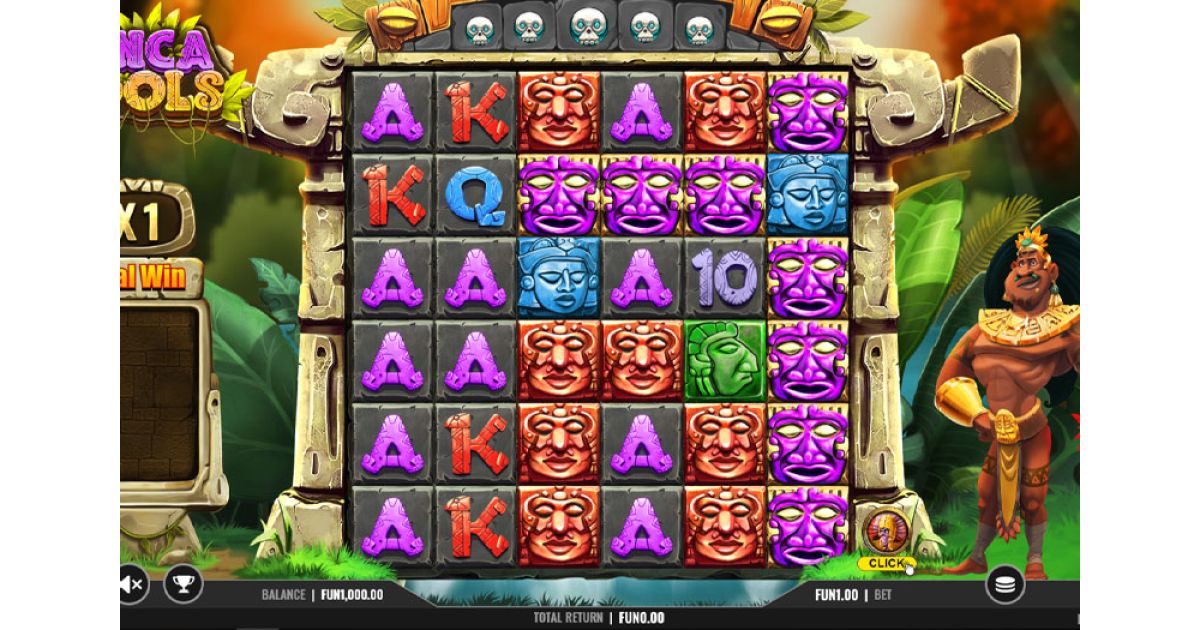
As you examine a slot game or a virtual blackjack table, it is easy to overlook that a high-speed RNG is constantly cycling through billions of potential outcomes every second. In reality, the moment you click the spin or deal button, the game software captures the current RNG value, translates it through a payout mapping table, and shows the corresponding visual result. I make it a point to explain that the RNG does not “decide” after you press; it is already running, and your action simply picks a snapshot of its stream. This architecture is essential for fairness because it blocks any possibility of timing manipulation. Developers who license their content to Incaspin Casino and other regulated platforms must embed certified RNGs in a way that assures a uniform distribution of all possible outcomes over millions of rounds. For table games, the mapping might convert numbers into virtual card draw orders, while for slots it determines reel positions. The certification process checks that this mapping corresponds to the advertised return-to-player percentage and that no hidden logic disrupts the random selection, giving the Canadian player a truly unpredictable experience every single session.
Continuous Audits and Reassessment Cycles
An RNG certification is not a enduring guarantee, and I make certain every platform I advise comprehends the value of uninterrupted examination. Testing facilities typically require yearly or even more regular reevaluations, and any change that impacts the core game logic initiates a required reassessment phase. This perpetual process is critical because harmful parties could attempt to modify the RNG after original validation, and even proper changes can unintentionally insert skews. As a professional advisor, I consider this fluid reassessment a health measure for the entire system. When you see that a gambling site like Incaspin Casino holds up-to-date accreditations across its full catalog, you are seeing a dedication to sustained integrity. The labs may also perform mystery-shopper evaluation, retrieving the genuine software and contrasting server responses against anticipated data patterns over time. For affiliates and gamblers equally, the unbroken review loop is maybe even more significant than the original mark because it shows that the dedication to equity did not stop on launch day. In a rapidly developing technical environment, current licensing is the sole method to guarantee that the RNG continues to be as solid as the day it was first approved.